







QR Code

About Us
Contact Us

Phone

E-mail

Address
BUILDING 20, SMALL AND MICRO ENTERPRISE ENTREPRENEURSHIP PARK OF RECYCLED FIBER CIRCULAR ECONOMY,WANGLI TOWN CANGNAN COUNTY WENZHOU ZHEJIANG CHINA


A high-quality wipe is no longer just a convenience product sitting on your cleaning shelf. It has become a core component of modern household hygiene routines, trusted by millions of families worldwide to tackle everything from quick kitchen spills to deep surface disinfection. The difference between an ordinary wipe and a truly high-quality one comes down to material composition, absorbency, durability, and the science behind how it interacts with different surfaces. As cleaning standards continue to rise, so does the expectation for Cleaning Tools that deliver real results without causing damage or leaving residue behind.
At Cangnan Rongfu Housewares Co.,Ltd., our factory has spent years developing wipes that go beyond surface-level performance. Our products are engineered with precision, drawing on deep industry knowledge and rigorous quality control to meet the demands of modern homes. Whether you are managing a busy kitchen, a bathroom, or a living space with delicate furniture, our wipes are designed to make every cleaning task faster, safer, and more effective. This article explores what truly defines a high-quality wipe, why it matters for your home, and how to identify the right product for your needs.
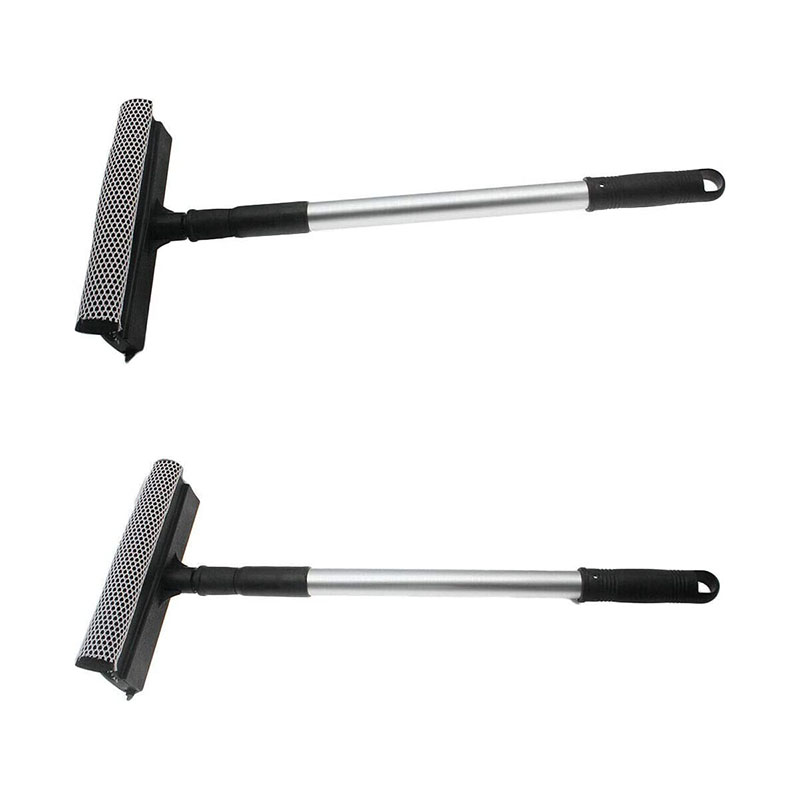
The foundation of any great wipe starts with the material. Not all fabrics are created equal, and the wrong choice can mean a product that falls apart mid-use, scratches delicate surfaces, or fails to absorb liquids effectively. High-quality wipes are typically constructed from one of several key material categories, each serving a distinct purpose in our range of Cleaning Tools.
Nonwoven fabrics are among the most widely used in premium wipe production. These engineered textiles are made by bonding fibers together through chemical, thermal, or mechanical processes rather than weaving. This gives them exceptional strength, consistent texture, and controlled porosity. Our factory uses spunlace nonwoven fabrics for the majority of our household wipe lines, as this method produces a soft yet durable sheet that resists tearing even under heavy scrubbing pressure.
Microfiber is another cornerstone material in our Cleaning Tools lineup. Composed of ultra-fine synthetic fibers, microfiber wipes can trap and lift particles as small as bacteria from surfaces without the need for harsh chemicals. The split-fiber structure creates millions of tiny hooks that physically capture dust, grease, and contaminants rather than simply pushing them around. This makes microfiber especially valuable in kitchen and bathroom environments where hygiene is paramount.
For disposable wipe applications, cellulose blends offer a cost-effective and biodegradable option. By combining natural cellulose with polyester or viscose, manufacturers can achieve a balance between softness and absorbency that suits general-purpose cleaning. Our product development team at Cangnan Rongfu Housewares Co.,Ltd. carefully selects material blends based on the intended use case of each SKU, ensuring that every wipe in our catalog is fit-for-purpose from the ground up.
Key material properties to look for in a high-quality wipe include:
Material choice is not just a technical decision. It directly affects the user experience, cleaning outcome, and the environmental footprint of the product. Our team continuously invests in material research to keep our Cleaning Tools aligned with both performance expectations and sustainability goals.
Absorbency is often the first thing consumers notice about a wipe, but its importance extends far beyond just soaking up liquid quickly. A wipe with poor absorbency forces the user to apply more pressure, use more product, or repeat the cleaning motion multiple times, all of which lead to frustration, surface damage, and higher long-term costs. Understanding absorbency from a technical standpoint helps explain why our wipes consistently outperform generic alternatives in real-world household use.
Absorbency is measured in two primary ways: liquid uptake capacity and absorption rate. Liquid uptake capacity refers to the total volume of liquid a wipe can hold relative to its dry weight, typically expressed as a multiple. A premium household wipe should be capable of absorbing at least six to eight times its own weight in water. Our factory tests every production batch against this benchmark as part of our standard quality assurance process.
Absorption rate, sometimes called strike-through time, measures how quickly a wipe begins to draw liquid away from a surface on contact. In practical terms, this is the difference between a wipe that immediately starts working when pressed against a spill and one that sits on top of the liquid before slowly drawing it in. Faster absorption rates reduce the chance of liquid spreading across a surface and make the cleaning process significantly more efficient.
Several structural factors influence absorbency performance:
Our Cleaning Tools are designed with layered structures that optimize both uptake capacity and absorption speed simultaneously. Rather than sacrificing one for the other, our engineering approach targets the ideal balance point for each product application. A kitchen wipe, for example, is built for rapid fat and water absorption, while our bathroom range prioritizes sustained moisture retention for surface wiping without dripping.
Absorbency also plays a role in the effective delivery of cleaning agents. When a wet wipe is pre-loaded with a disinfectant or cleaning solution, the material must hold that solution evenly across its surface without releasing it all at once on first contact. Our liquid retention engineering ensures that our wipes deliver consistent chemical coverage across the full area of each cleaning stroke, maximizing the effectiveness of every single use and reducing the waste of cleaning solution.
Manufacturing excellence is the invisible backbone of every high-quality wipe. Consumers rarely think about what happens before a wipe reaches their hands, but the production process has a direct and measurable impact on consistency, safety, and performance. At Cangnan Rongfu Housewares Co.,Ltd., our factory operates under a comprehensive quality management framework designed to meet the requirements of international markets across Europe, North America, Asia, and beyond.
Our production facility is equipped with automated spunlace nonwoven lines, precision slitting and folding machinery, and cleanroom-grade packaging environments for our hygiene product ranges. Each stage of production is governed by documented standard operating procedures and monitored by trained quality control personnel. Raw material incoming inspection, in-process checks, and finished goods testing are all integrated into a continuous quality loop that prevents defective products from advancing through the supply chain.
Our manufacturing process follows these key stages:
Our certifications and compliance framework cover the major requirements of global retail buyers, private label customers, and direct importers. Our Cleaning Tools meet the material safety requirements applicable to food contact and skin contact categories, giving buyers confidence in both consumer safety and regulatory compliance. We maintain active certifications that are reviewed and renewed annually as part of our commitment to continuous quality improvement.
Beyond certifications, our factory culture emphasizes accountability at every level. Line operators are trained to identify and escalate quality deviations immediately. Our production data is logged digitally, creating a traceable record for every batch that allows us to investigate any reported issue with precision and speed. This level of manufacturing discipline is what separates our wipes from lower-cost alternatives that may look similar on paper but deliver inconsistent results in practice.
Specifications are the language of professional buyers, and understanding them is essential for anyone sourcing Cleaning Tools at scale. Below is a detailed overview of the core product parameters available across our main wipe categories. These specifications reflect our standard production capabilities and can be customized within defined ranges for OEM and private label orders.
| Parameter | Dry Household Wipe | Wet Cleaning Wipe | Microfiber Wipe | Disposable Kitchen Wipe |
| Material Composition | 70% Viscose / 30% Polyester | 60% Viscose / 40% Polyester | 80% Polyester / 20% Polyamide | 50% Cellulose / 50% Polyester |
| Basis Weight (gsm) | 40 - 60 gsm | 55 - 80 gsm | 200 - 300 gsm | 35 - 50 gsm |
| Sheet Size (cm) | 20 x 20 / 30 x 30 | 20 x 20 / 25 x 30 | 30 x 30 / 40 x 40 | 20 x 20 / 30 x 20 |
| Tensile Strength (Dry) | Above 35 N/5cm | Above 40 N/5cm | Above 80 N/5cm | Above 30 N/5cm |
| Tensile Strength (Wet) | Above 20 N/5cm | Above 25 N/5cm | Above 60 N/5cm | Above 18 N/5cm |
| Absorbency Rate | 6x dry weight | 7x dry weight | 7x dry weight | 5x dry weight |
| Surface Texture | Smooth / Embossed | Smooth / Perforated | Waffle / Flat | Creped / Embossed |
| Color Options | White / Custom | White / Custom | Multi-color / Custom | White / Yellow / Custom |
| Packaging Format | Roll / Flat pack | Pouch / Canister | Bag / Box | Roll / Flat pack |
| MOQ | 5,000 packs | 10,000 packs | 3,000 packs | 5,000 packs |
| OEM / Private Label | Available | Available | Available | Available |
| Lead Time | 20 - 30 days | 25 - 35 days | 20 - 30 days | 20 - 30 days |
All specifications listed above represent standard production parameters. Custom sizes, weights, and material blends are available upon request. Our technical team at Cangnan Rongfu Housewares Co.,Ltd. works directly with buyers to develop product specifications that meet their market positioning, retail pricing, and compliance requirements. Sample development is available for qualified buyers prior to placing production orders.
Trust is built through consistency, and consistency is the result of disciplined processes applied day after day across thousands of production cycles. Our Cleaning Tools have earned recognition in international markets not because of aggressive marketing, but because buyers and end consumers repeatedly find that our products perform exactly as described and last as long as promised. This reliability is not accidental. It is the direct outcome of the manufacturing philosophy and quality standards that define everything we produce at Cangnan Rongfu Housewares Co.,Ltd.
Our export history spans over a decade of continuous supply to retail chains, wholesale distributors, private label brands, and e-commerce platforms across more than thirty countries. In each of these markets, our wipes have had to compete with locally established brands and low-cost regional manufacturers. Our ability to maintain and grow our customer base in these competitive environments speaks directly to the quality and value consistency that our products deliver.
Buyers choose our Cleaning Tools for the following core reasons:
End consumers trust our products because they deliver a noticeably different cleaning experience. The tactile quality, the absorbency performance, and the structural integrity of our wipes create an immediate impression of value that builds brand loyalty over time. For private label customers, this means lower return rates, stronger repeat purchase patterns, and positive product reviews that drive organic growth.
Our commitment to continuous improvement means that we never treat existing performance as a fixed ceiling. Our R and D team regularly benchmarks our products against market leaders, incorporates buyer feedback into product iterations, and evaluates new materials and manufacturing technologies as they become available. This forward-looking mindset ensures that our Cleaning Tools remain relevant and competitive as household cleaning standards continue to evolve globally.
Choosing the right wipe is a practical skill that most households develop through trial and error. The cost of that process, in both wasted money and suboptimal cleaning results, can be significant over time. A structured approach to wipe selection based on surface type, cleaning task, and desired outcome removes the guesswork and ensures that every cleaning session delivers the best possible result with the least effort.
The first step is to match the wipe material to the surface. Delicate surfaces such as glass, polished stone, lacquered wood, and electronic screens require low-lint, non-abrasive materials that will not leave scratches or residue. Microfiber and smooth nonwoven wipes are ideal for these applications. Rougher surfaces such as stovetops, tile grout, and outdoor furniture benefit from wipes with a textured or embossed surface that provides mechanical scrubbing action alongside absorbency.
The second consideration is whether the task requires a dry, damp, or pre-moistened wipe. Dry wipes offer maximum flexibility as they can be used as-is for dusting or dampened with any preferred cleaning solution. Pre-moistened wet wipes provide consistency and convenience for tasks where specific cleaning chemistry is needed, such as antibacterial surface treatment or grease cutting in kitchens.
Use this quick-reference guide to match wipe type to common household cleaning tasks:
| Cleaning Task | Recommended Wipe Type | Key Property Required |
| Glass and mirror cleaning | Microfiber flat wipe | Low lint, streak-free finish |
| Kitchen counter spill cleanup | Disposable wet kitchen wipe | High absorbency, grease cutting |
| Bathroom surface disinfection | Pre-moistened antibacterial wipe | Chemical compatibility, durability |
| Dusting furniture and shelves | Dry nonwoven dust wipe | Electrostatic attraction, soft surface |
| Stovetop and hob degreasing | Embossed heavy-duty wipe | Scrubbing texture, heat resistance |
| Floor spot cleaning | Large format wet cleaning wipe | Size coverage, wet strength |
| Electronic screen wiping | Ultra-fine microfiber wipe | Anti-static, no chemical residue |
| Child and pet area hygiene | Hypoallergenic wet wipe | Skin-safe formula, fragrance-free |
Beyond task matching, storage and packaging format also influence the right choice. Resealable pouch packaging keeps pre-moistened wipes from drying out and extends product shelf life significantly. For households that go through large volumes of dry wipes, roll or bulk flat-pack formats offer better value and reduce packaging waste. Our factory offers the full range of packaging formats to accommodate different household usage patterns and retail preferences, making it straightforward to find the right configuration within our Cleaning Tools catalog.
A high-quality wipe is defined by the sum of its parts: the materials selected, the manufacturing precision applied, the performance specifications achieved, and the real-world cleaning outcomes it delivers. As household hygiene expectations continue to rise and consumers become more informed about product quality, the gap between ordinary wipes and genuinely superior Cleaning Tools becomes increasingly visible and commercially significant.
At Cangnan Rongfu Housewares Co.,Ltd., our factory is built around a single core belief: that everyday cleaning products deserve the same engineering rigor and quality discipline as any other manufactured good. Every wipe we produce reflects that commitment, from the raw material sourcing decisions made at the start of development through to the final quality checks before shipment.
Our product range is designed to serve households, hospitality businesses, healthcare environments, and retail brand owners who share a commitment to quality and performance. Whether you are looking to source high-volume disposable wipes, develop a private label microfiber cleaning range, or find a reliable manufacturing partner for your next product launch, our team is ready to support your goals with technical expertise, flexible production capabilities, and a proven track record of international delivery.
If you are ready to explore how our Cleaning Tools can add value to your product offering or household cleaning routine, reach out to our team today. We offer sample programs for qualified buyers, detailed product data sheets, and dedicated account support from initial inquiry through to ongoing supply. Partner with Cangnan Rongfu Housewares Co.,Ltd. and experience the difference that genuine manufacturing excellence makes.
A genuinely high-quality wipe differs from standard supermarket alternatives in three fundamental areas: material composition, manufacturing precision, and performance consistency. Premium wipes use engineered nonwoven fabrics or microfiber materials with controlled fiber density, defined tensile strength, and verified absorbency rates. Standard budget wipes are often produced with lower-grade cellulose or loosely bonded synthetic blends that tear easily under pressure, leave lint on surfaces, and absorb liquid unevenly. High-quality wipes also undergo rigorous batch testing at the manufacturing stage to ensure that every unit in a pack performs identically, whereas lower-cost alternatives frequently have significant variation from one sheet to the next. For households and buyers who want reliable results rather than a mixed cleaning experience, the difference in real-world performance between these two tiers is substantial and immediately noticeable.
Absorbency selection should be based on the type and volume of liquid you most commonly deal with during cleaning tasks. For general household use involving light spills, dust, and surface wiping, a standard wipe with an absorbency rating of five to six times its dry weight is typically sufficient and offers good cost efficiency. For kitchen environments where grease, cooking oil, and large liquid spills are common, a higher-absorbency product rated at seven times or above will perform noticeably better by picking up more material per wipe stroke and reducing the number of sheets needed per task. For dry dusting tasks, absorbency is less critical than the electrostatic properties of the material. The most effective approach is to stock two to three wipe types tailored to the specific tasks in your home rather than relying on a single universal product to handle every situation.
Fabric weight, expressed in grams per square meter (gsm), is one of the most reliable indicators of a wipe's durability, thickness, and cleaning performance. A higher gsm value generally means a denser, heavier fabric that can withstand more pressure and repeated folding without tearing. For heavy-duty cleaning tasks like scrubbing tile grout or wiping down stovetops, a wipe with a basis weight of 60 gsm or above will hold its structure throughout the task. For light-duty applications such as dusting shelves or wiping down glass surfaces, a lighter wipe in the 35 to 50 gsm range offers excellent performance with a softer touch that reduces the risk of surface scratching. Understanding gsm also helps buyers accurately compare products across different suppliers, since sheet size and perceived thickness alone can be misleading without knowing the actual fabric weight behind them.
Spunlace nonwoven and microfiber are both widely used in high-quality household wipes but serve different performance profiles. Spunlace nonwoven is produced by entangling loose fibers with high-pressure water jets, creating a strong, soft sheet that bonds without adhesives or chemicals. This makes it highly suitable for pre-moistened wet wipes because the material retains its integrity when saturated with cleaning solutions. It is also cost-effective for disposable applications where single-use convenience is prioritized. Microfiber, by contrast, is a woven or knitted fabric made from ultra-fine synthetic filaments typically thinner than a human hair. The split-fiber structure of microfiber creates a dense network of tiny loops and hooks that physically capture dust, bacteria, and grease particles at a microscopic level. Microfiber excels in reusable cleaning applications, particularly on glass, polished surfaces, and electronic screens, where streak-free results are essential. The right choice depends entirely on whether you prioritize convenience and hygiene in disposable use or performance and sustainability in a reusable cleaning tool.
Proper storage is critical to preserving the performance and shelf life of pre-moistened wet wipes. The most important factor is keeping the packaging sealed between uses to prevent moisture evaporation. Resealable pouch packaging with a strong adhesive closure is the most effective format for maintaining consistent moisture levels across all sheets in a pack. Wipes should be stored at room temperature and kept away from direct sunlight, which can degrade both the fabric material and the cleaning solution it carries. Extreme temperatures, particularly heat above 40 degrees Celsius, can accelerate the breakdown of active cleaning ingredients and reduce the antimicrobial effectiveness of disinfectant wipes. For bulk storage of unopened packs, a cool, dry indoor environment away from direct heat sources is ideal. Once a pack is opened, it should ideally be used within four to six weeks to ensure optimum moisture retention and cleaning performance. Storing partially used packs in an upright position with the resealable closure at the top further reduces the rate of moisture loss from the uppermost sheets.
BUILDING 20, SMALL AND MICRO ENTERPRISE ENTREPRENEURSHIP PARK OF RECYCLED FIBER CIRCULAR ECONOMY,WANGLI TOWN CANGNAN COUNTY WENZHOU ZHEJIANG CHINA